In brief:
- Hyper-personalization: Customers expect personalized experiences, but brands need to strike a balance to avoid frustrating customers with irrelevant offers.
- Omnichannel engagement: A seamless journey across multiple channels and devices is becoming essential for retaining customer loyalty.
- Sustainability: Customers are increasingly concerned about sustainability and ethical practices, and brands must integrate these values into their CX transformation strategies.
Table of contents:
| In brief | 1 |
| Hyper-personalization | 1 |
| What’s next | 2 |
| Omnichannel engagement | 2 |
| What’s next | 2 |
| Sustainability | 3 |
| What’s next | 3 |
| The forgotten ingredient to CX transformation? | 4 |
| Conclusion | 4 |
“Customers want things easy, fast and effortless”
LaChelle Porter-Ainer, Vice President of Global Customer Support – Schneider Electric
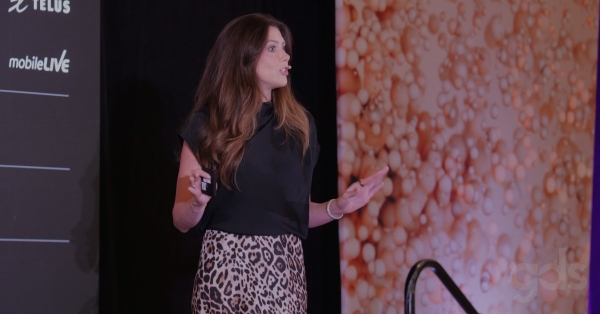
At the recent GDS CX innovation summit, she acknowledged the role of the COVID-19 pandemic in catalyzing huge changes in consumer behaviors, expectations and needs, “but those expectations are increasing further post-COVID.”
So, what is the direction of travel? What’s driving the change? And most importantly, how can brands prepare for what’s next?
Hyper-personalization
Salesforce research found that 66% of consumers expect companies to understand their unique needs and expectations, while 52% expect all offers to be personalized.
However, with Segment finding that 77% of consumers become frustrated if they receive communication about promotions they’re not interested in, getting it right can be a tricky balancing act.
Brands are required to make the customer feel heard and understood as an individual, but this needs to happen at scale. And in the face of limited resources, CX and marketing leaders must resist the temptation to automate inadequate processes or harness AI solutions with poor-quality data.
We’ve all been there, personalization that entirely misses the mark is worse than no personalization at all.
What’s next?
The balancing act is about to get even trickier.
While – so far – the winning strategy for pioneers of personalization has been actioning clean data insights and leveraging AI, Twilio’s recent The State of Personalization report has shone a light on some potential complications. It found that 60% of customers do not feel comfortable with AI being used to create customized experiences. Furthermore, 49% don’t trust brands to keep their data secure or to use it responsibly.
We know that consumers have little tolerance for data misdemeanors, famously evidenced by the response to Facebook’s Cambridge Analytica scandal, where actions on the Facebook platform declined by almost 20% in the month that followed.
As brands further push the limits of their personalization capabilities, they will need to consistently prove the trustworthiness of their AI solutions, as well as their data security.
Omnichannel engagement
A truly omnichannel experience allows customers to enjoy a seamless journey across multiple channels, and the ability to hop between devices and touchpoints without losing context or a sense of the brand’s identity. While achieving this is no doubt an immense challenge, McKinsey recently highlighted that it’s “a requirement for [retail] survival.”
Moosend found that 85% of digital consumers start the purchasing workflow on one device but finish it on another. This goes to show that customers are already in the habit of expecting a seamless experience; something that used to be an impressive feat of customer journey mapping now serves as a baseline requirement to maintain loyalty.
What’s next?
A “Phygital World”.
McKinsey’s exploration of “Omnichannel shopping in 2030”, suggests that we’re on our way there already – “where there is not a physical world or digital world in retail, but rather a completely connected one.”
What’s more, they anticipate a future where personal and omnichannel experiences will be blended to create “stores designed just for you.” Brick-and-mortar stores would draw consumers in with the promise of new products and experiences that are customized for the individual.
Sustainability
In her keynote session at the CX innovation summit, Porter-Ainer highlighted sustainability as an “imperative” element to any CX transformation strategy. She pointed to the emergence of younger buyers onto the market who are “more mindful than ever about how brands deal with this topic.”
According to The Economist Intelligence Unit, online searches for sustainable goods have gone up by 71% over the past five years, as part of a so-called “Eco-wakening”.
And while 78% of people are more likely to buy a product clearly labelled as eco-friendly, brand leaders need to be sure their products are eligible to be labelled as such, or they risk seriously damaging their customers’ trust. And once trust is lost, it is seriously hard to claw back.
Take Volkswagen – and the entire automotive industry – as an example. They have been cast under a dark reputational shadow since the 2015 emissions scandal when the German car giant conceded that they had cheated emissions tests in the US.
What’s next?
A culture shift.
Georg Kell, Chairman of the Board of Arabesque, wrote for Forbes about the root causes of Volkswagen’s “Diesel Dupe” and put simply, he placed the majority blame on leadership:
“The Diesel-gate scandal was the product of a corporate culture where financial targets had to be met and failure was not an option. Inability to meet emissions regulations […] could not be reported to leadership – so it was necessary to cheat.”
How can organizations achieve their sustainability goals if their internal processes and KPIs undermine them?
Brand leaders face an imperative to evaluate their internal culture and foster an environment that prioritizes accountability and sustainable innovation. No longer can social and environmental commitments be relegated to isolated initiatives in the name of box-ticking or compliance, rather they will need to be embedded into an organization’s overall CX transformation strategy.
Moreover, customers will be asking more questions about the origins and ethical creation of the products they buy. To meet this mounting expectation, brands will be prudent to explore ways of providing answers accurately and in real-time.
The forgotten ingredient to CX transformation?
In a poll at the recent CX innovation summit, executive attendees were asked to share their customer base’s top priority. “Price” and “a seamless omnichannel experience” tied in first place with 26% each. But one executive joined the stage to highlight the significance of “social responsibility” receiving 0% of the vote.
“It’s an evolving topic” LaChelle Porter-Ainer responded, “People are still trying to understand what [social responsibility and sustainability] mean in the experience space.”
She concluded, “[Sustainability] is in the customer’s mind because they’re not only thinking about the experience, they’re thinking about your brand as a whole and the entire process.”
Conclusion
As customer expectations continue to evolve, CX leaders are tasked with proactively adapting their strategies to stay competitive.
In her keynote at the recent CX Innovation summit, however, LaChelle Porter-Ainer urged the attendees to prioritize improving any gaps within their customer journeys, before ramping up strategies to meet external trends.
“Transforming CX requires understanding the customer and where to deliver more value.
Focus on looking at the customer’s needs at the critical touchpoints [as well as] how you can help them to move forwards.”
Our recent CX innovation North America digital summit ended with an impressive average content attendance of 96% and a meeting completion rate of 111% against target.
Partnering with GDS Group can help you get in front of the right people at the right time.
Don’t miss out on the opportunity to attend one of our unforgettable event experiences that promise to leave you feeling inspired and empowered.
Check our calendar now and join us. We can’t wait to see you there!